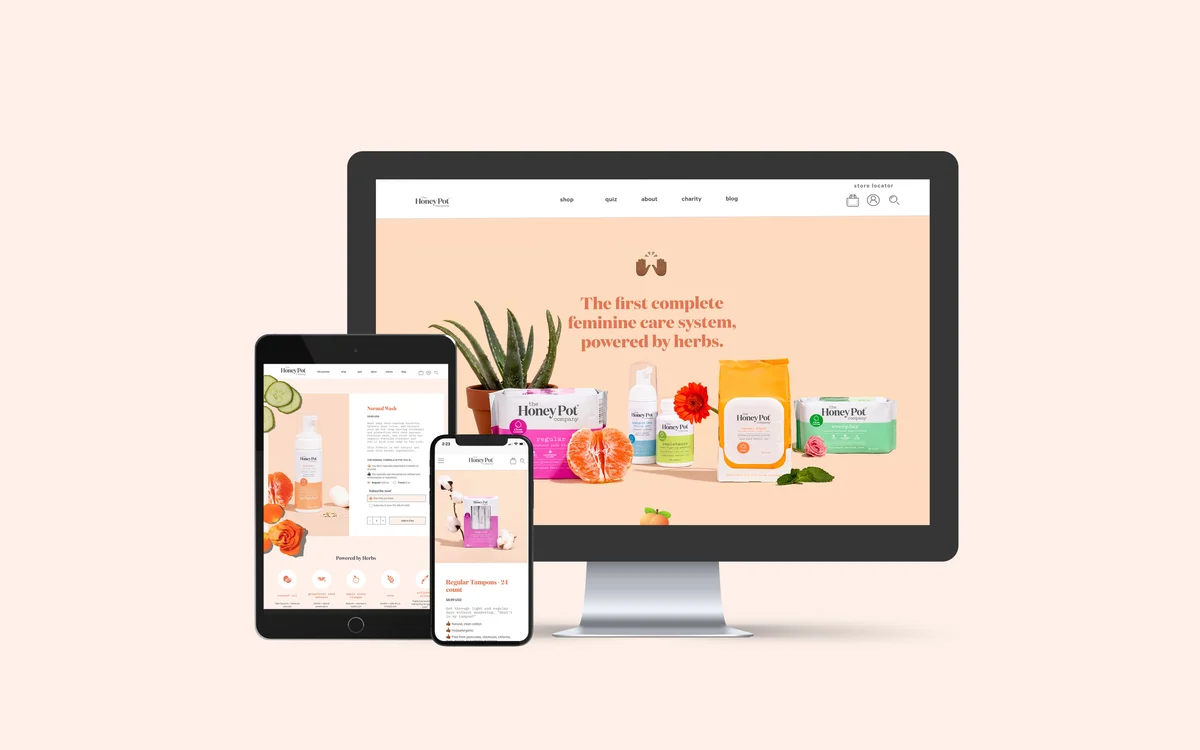
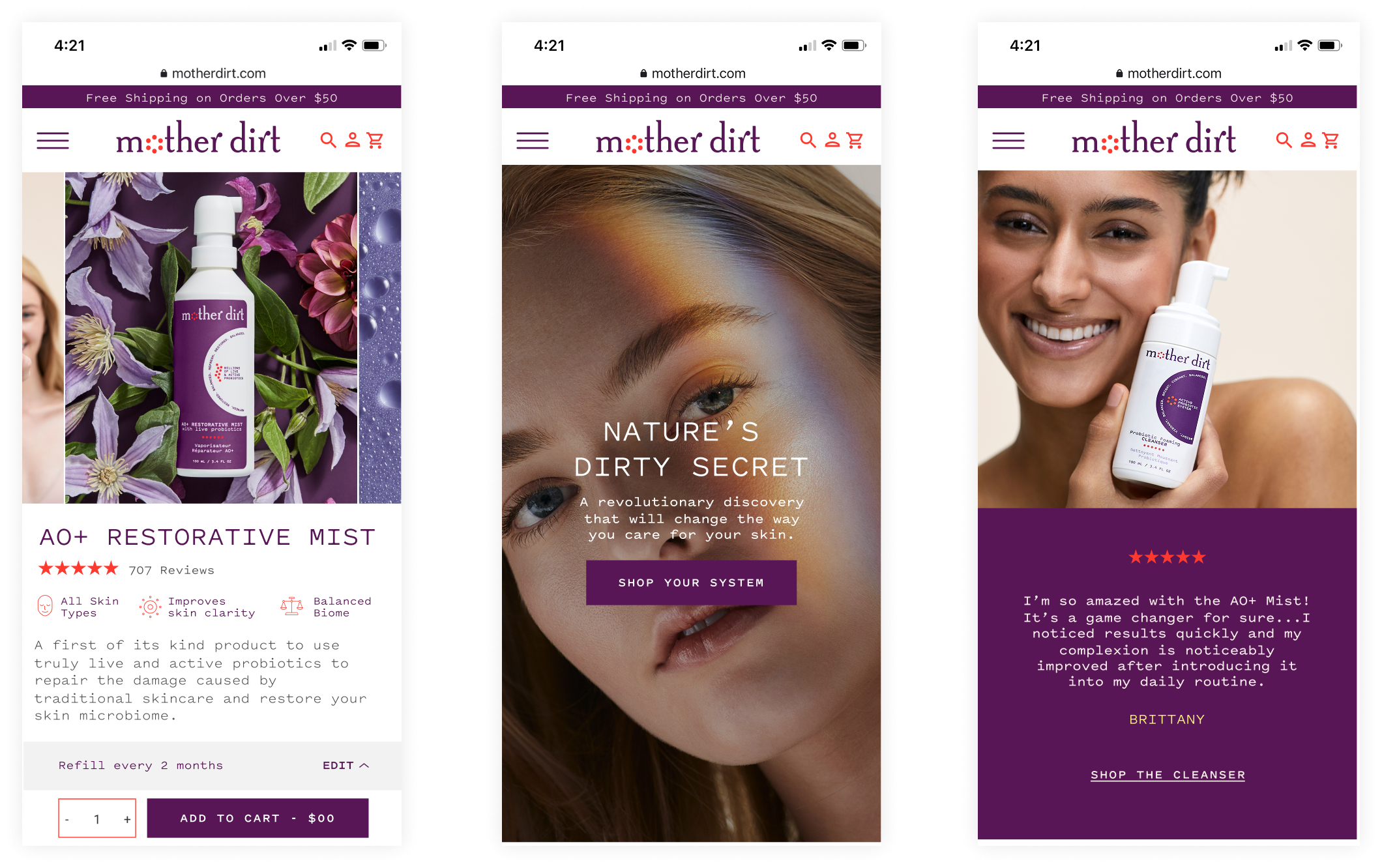
The economics of building great websites just changed.

AI-assisted development lets our team move faster through the repetitive parts of web production, so more of your investment goes toward strategy, design, experience and the things that make your brand different.

AI-assisted design + development

Agency thinking. A far more efficient build.

A company that needs a genuinely good website has had four options: a six-figure custom engagement, a template it outgrows, a group of freelancers to manage, or another year with the site it has. Now there is a fifth. Our senior team leads the strategy, design and architecture, and modern AI development tools take on much of the production work. The result sits between a template site and a traditional custom build.
The old model

Most of a web budget goes to production hours.

Custom websites have been expensive because they take a lot of skilled production time. Those tasks still matter. They no longer need to consume the same amount of it.

Components

Translating every design into coded, reusable components and their variations.

Responsive states

Building and checking each layout across phones, tablets and desktops.

CMS configuration

Setting up fields, templates and content structures your team will use.

Content + migration

Moving, restructuring and entering content from the old site.

Integrations + QA

Connecting systems, chasing edge cases and iterating through testing.

Same expertise. Better leverage.

AI compresses production. It doesn’t remove expertise.

Instead of spending hours writing every repetitive component by hand, our team spends more of the project on the experience itself.

Traditional model

Strategy · Design · Production · Production · Production · Production · QA. Most of the timeline, and most of the budget, goes to building.

AI-assisted model

Strategy · Strategy · Design · Experience · Rapid production · Iteration · QA. Production shrinks, and the time it frees goes back into thinking, designing and refining.

Who does what

AI can generate code. It can’t decide what your business should build.

We use tools like Claude Code and other AI-assisted workflows as a force multiplier for experienced people, not a substitute for them.

AI helps us accelerate

Component development, responsive implementation, CMS configuration, content migration, code refactoring, integration scaffolding, documentation, testing, debugging and rapid prototyping.

Our team owns

Strategy, brand expression, creative direction, UX and information architecture, technical architecture, accessibility, performance, platform decisions, business logic, quality control and taste.

More iteration, not less

When building gets faster, exploring gets cheaper.

In a traditional build, every new idea costs development hours, so teams protect the plan. When implementation moves faster, the work gets better through iteration.

Prototype more directions

See real, working versions of an idea before committing to one.

Test interactions sooner

Try motion, navigation and flows in the browser, not just in design files.

Change course earlier

Adjust while it is still inexpensive, instead of defending sunk hours.

Refine the details

Put the saved time into the polish customers actually notice.

Why it matters now

Your legacy platform is becoming a business decision.

Many companies running older Magento and Adobe Commerce implementations are approaching an uncomfortable point. Older PHP versions and Magento releases are reaching, or have already reached, end of support, and the databases, search infrastructure, extensions and libraries around them have lifecycle deadlines of their own. The technology under the store needs to be modernized simply to stay secure, supported and maintainable.

Once years of custom code, extensions, integrations and technical debt are involved, an “upgrade” can start to look a lot like a rebuild. That raises a bigger question: if you’re already rebuilding the stack, is it worth rebuilding it on the same platform? For many brands, this is the right moment to evaluate Shopify Plus.

ShopifyPartner
Not a lift-and-shift

Move the business. Not the technical debt.

A migration shouldn’t be an archaeological exercise where every decision made over the last decade gets recreated on a new platform. The valuable work happens before and around the code: understanding the legacy system, separating business requirements from technical debt, redesigning the architecture and deciding what should actually exist on the new platform.

What needs to survive

The checkout, catalog, pricing and account logic that genuinely runs the business, identified and rebuilt properly rather than copied line for line.

What gets left behind

Abandoned extensions, workarounds and dependencies that only existed to keep the old stack running.

Native vs. custom

Functionality Shopify now handles natively, and the specific places where custom development is actually justified.

Integrations, preserved or redesigned

ERP, CRM, fulfillment, tax, payments, PIM and subscriptions, mapped and rebuilt around how the business operates today.

A better customer experience

Treated as part of the migration, not a phase two, so customers notice an upgrade instead of a change of address.

No disruption to the business

Revenue-critical workflows protected, with rehearsed data migrations and a cutover planned around your selling calendar.

Magento to Shopify migration
Where the leverage shows up

Complex migrations don’t get trivial. Experienced teams get more leverage.

Migrations involve enormous amounts of analysis, repetitive implementation, data transformation, testing and documentation. That is exactly the work modern development tools compress, which frees our senior team to spend its hours on architecture, experience and the decisions that protect revenue.

Analysis

Working through years of custom code, extensions and integrations to document what the store actually does, including what nobody remembers building.

Code modernization

Translating legacy business logic into clean, current implementations instead of patching it forward.

Data transformation

Mapping products, customers, orders and content, with repeated test migrations before the real one.

Integration work

Rebuilding and testing connections to ERP, CRM, fulfillment and tax systems in far less time.

Testing + documentation

Broader regression coverage and documentation your team can use long after launch.

Iteration

Working versions of the new experience early, refined against the old store well before cutover.

Built on real platforms

Real production websites that you own.

01

Shopify

Custom themes and apps for ecommerce brands that have outgrown an off-the-shelf theme.

02

WordPress

Flexible, editable marketing sites with a CMS your team can actually use.

03

Headless + Next.js

React and Next.js front ends paired with a modern CMS when speed or flexibility call for it.

04

Your existing stack

We can modernize what you already run instead of starting over.

When it makes sense

Built for brands whose website hasn’t caught up.

You have the brand. The website hasn’t caught up.

Strong visual assets and a site that undersells them.

Your Shopify theme has become a maze of workarounds.

Apps, patches and custom code layered on a theme that was never meant for it.

A six-figure rebuild isn’t responsible right now.

You need a real redesign without a traditional agency budget.

Your team can’t make changes without a developer.

Every new page or promotion waits in someone else’s queue.

You’re carrying years of web debt.

Old code, old plugins and decisions nobody remembers making.

You’re facing a Magento or Adobe Commerce upgrade.

Modernizing Magento can be a major engineering project. If you’re going to rebuild, it’s worth asking what you’re rebuilding on.

Explore a migration

Digital experiences that build brands.

View all work

Not a site generated from a prompt. Not a template. Not cutting corners. New tools to cut the unnecessary ones.

Tell us what you’re building
What's next starts here

Let's build together.

Evolving, launching or looking for your next growth opportunity?